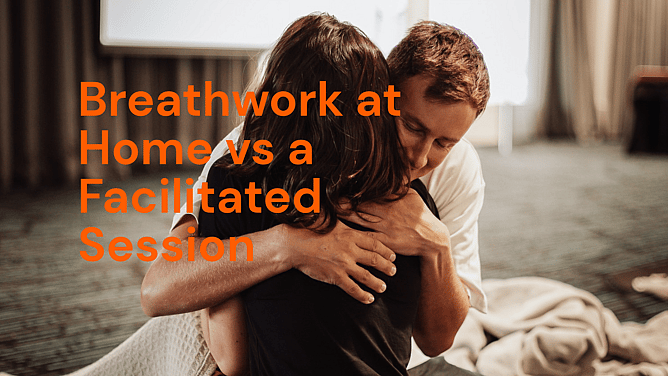
“Can’t I just do this on my own?”
It’s a fair question, and my honest answer is yes, partly. There are really three ways to practise, and each does a different job.
1. Home practice
Simple breath practices are some of the most accessible tools we have. A long, slow exhale. A few minutes of gentle, steady breathing. Five deep breaths before a difficult conversation. These calm your nervous system, ease the grip of stress, and bring you back into your body.
They cost nothing, take a few minutes, and you can do them anywhere. I use them myself, and I’d encourage everyone to build a few into their day. The world would be a better place if everyone did.
2. Guided sessions on YouTube
This is the middle ground. Having a voice to follow takes away the guesswork. You don’t have to count, time or wonder if you’re doing it right. You press play, close your eyes and let yourself be guided.
I share free guided practices on my YouTube channel for exactly this reason. They’re a great way to experience what guided breathwork feels like, build a regular habit, and find out whether this work resonates with you before committing to anything more.
You’ll find them on my Youtube here
3. A facilitated 1:1 session
Home practice and guided videos tend to work with the surface of the nervous system, the stress and tension of today. But many of the patterns we carry run much deeper. Beliefs formed in childhood. Emotions we’ve tucked away for years. Stories our minds tell to keep us safe.
Going deeper alone is difficult. When something big starts to surface, the mind tends to step in. It analyses, it rationalises, or it quietly changes the subject. Most of us don’t notice it happening, because the mind has had decades of practice at protecting us from exactly the things we most need to feel.
A facilitated session offers what the other two can’t:
Safety. When you’re not holding the space for yourself, you can let go in a way that’s very hard to do alone.
Guidance in the moment. I’m reading your breath, your body and what’s coming up, and adjusting as we go. If something intense arises, I’m there to support you through it.
Depth. With support, we can go beyond easing the symptoms and into what’s actually underneath.
Integration. After the breathing, we talk about what you noticed and what it means. That’s where an experience becomes something you can carry into your life.
Accountability. It’s easier to keep showing up for yourself when someone is walking alongside you.
A word on safety
The deeper style of breathwork I use in sessions, conscious connected breathing, isn’t something I’d recommend practising alone. It creates strong changes in the body and can bring up powerful emotions, so it’s best done with someone trained, after a proper health check.
The gentler practices, like slow breathing and extended exhales, are a different matter, and are fine for most people at home or with a guided video.
They work best together
It’s not either/or. Think of it like fitness. You can move your body every day, and follow a class online, but there’s a reason people also work with a personal trainer. The daily practice keeps you steady, and the guided sessions take you further than you’d go alone.
A few minutes of gentle breathing most days, a video when you want some company, and a session when you’re ready to go deeper is a beautiful combination.
Where to start
And if you’re curious about what a facilitated session feels like, I’d love to chat.
John